Manual trading exposed a weaker side of my work, while system design played to a stronger one. I built an AI crypto trading pet project that evaluates signals, follows rules, and reviews the result of every trade.
This article describes an experiment, not trading advice. It contains no signals, return promises, or asset recommendations.
What made manual trading difficult
I spent a year and a half studying futures, spot markets, arbitrage, and trading bots. I understood the mechanics better, but manual execution remained my weak point.
During a drawdown, I became nervous, closed positions too early, and broke my own rules. The setup would sometimes play out after I had already left it. That cost deposits, time, and attention.
Crypto markets operate around the clock and remain volatile. The SEC warns that investments in crypto asset securities can be exceptionally volatile and speculative.
“Investments in crypto asset securities can be exceptionally volatile and speculative.” — SEC Investor.gov
Source: SEC Investor.gov alert
In that environment, emotional execution can break a strategy chosen in calmer conditions.
Why I chose automation
I combined three familiar areas: AI, crypto, and automation. The system does not promise to predict the market. It executes defined logic without fatigue or impulsive decisions.
An algorithm can:
- watch the market without breaks;
- follow the rule after a stop;
- avoid a revenge trade;
- preserve the strategy through a drawdown;
- log data for later review.
How the first version works
The workflow has five steps:
- The system receives open interest, liquidation, and volume data.
- Algorithms evaluate the situation and filter noise.
- An LLM reviews the context and decides whether to enter or skip.
- For an entry, the system calculates the stop, take profit, and position size.
- A separate process extracts lessons after the trade closes.
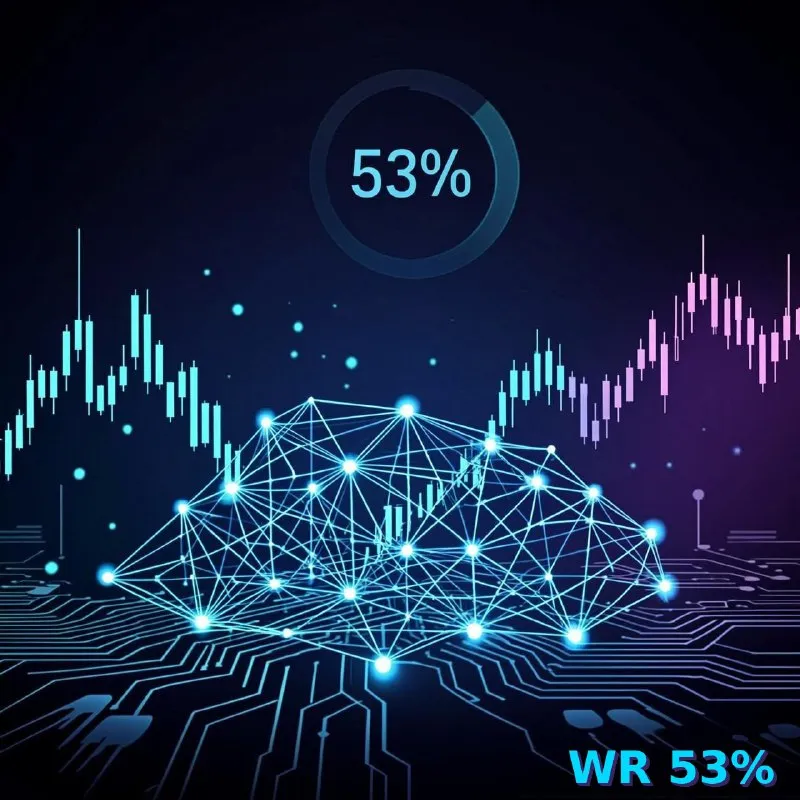
The first version used DeepSeek R1, Windmill, Bybit, and Telegram. At the time of the original publication, the monthly win rate was around 53%.
One metric does not establish profitability. It has to be read alongside risk and reward, drawdown, fees, slippage, and sample size.
Lesson Learning after every trade
The post-trade review is the most useful part for me. Automation adds little value when it only repeats human mistakes faster.
After every trade, a separate model reviews the signals, thresholds, and changes in market context. The result becomes a decision log with conclusions that can be tested later.
NIST lists validity, reliability, safety, resilience, accountability, and transparency among the characteristics of trustworthy AI.
“Characteristics of trustworthy AI systems include: valid and reliable, safe, secure and resilient, accountable and transparent...” — NIST AI RMF
Source: NIST AI Risk Management Framework
A trading system needs clear input data, logic, limits, and ownership. Without them, automation makes risk harder to inspect.
What the experiment shows for business
This case is about automating a weak point. In many processes, a person knows the rule but breaks it under time pressure, fatigue, or emotion. The result may also go unlogged and unreviewed.
Algorithms and AI are useful where discipline, repeatability, and feedback matter. Teams can test that value in trading, quality control, request processing, or another workflow with explicit rules.
Project limits
AI trading retains market and technical risk. A model can be wrong, data can arrive late, an exchange can fail, and a strategy can decay. A successful backtest cannot guarantee performance in a live market.
A serious version starts with maximum risk, stops, logs, sample size, and shutdown conditions. Mine remains a pet project and an automation lab. It makes no return promise.