
People are not asking AI to become a “replace me” button. They want a tool that handles routine work, helps them grow, and does not demand blind trust.
Products such as Digital Shadow therefore need a clear purpose. AI should strengthen the user, show the basis for its answers, and leave decisions in human hands.
What Anthropic studied
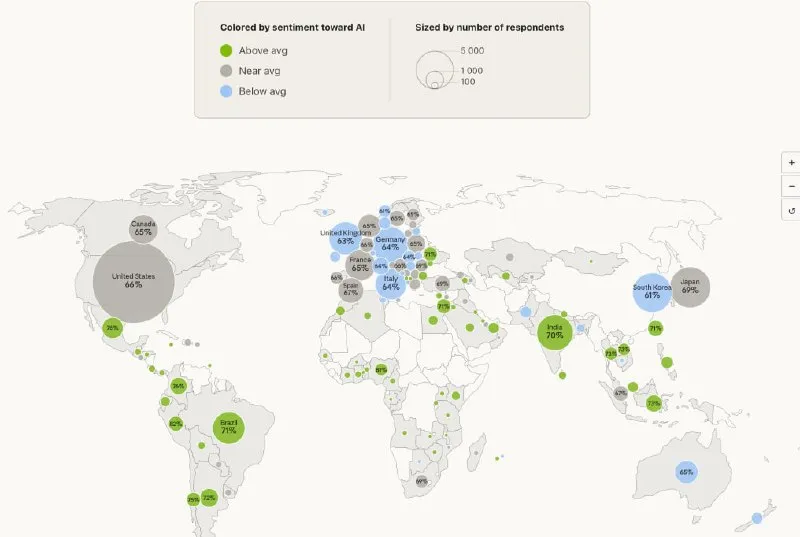
Anthropic analyzed 80,508 interviews with active Claude.ai users from 159 countries. The interviews took place in 70 languages during December 2025, after which the responses were de-identified and grouped by theme.
This is a large qualitative sample, not a quick social media poll. Participants described how they hoped AI would change their lives and what they feared it might take away.
Users are looking beyond whether a model can write text. They want to know if it will improve their work, whether they can verify its output, and whether they will retain their own skills.
Atlassian defines the role of product requirements this way:
“A product requirements document (PRD) defines the purpose, features, and behavior of a product, aligning stakeholders and guiding development.”
Source: Atlassian, Product Requirements Document
The quote covers product development generally, but it identifies a common weakness in AI services. When an assistant promises to help with everything, users cannot tell what it can do or where its limits lie.
Professional growth is the leading request
Professional excellence was the largest category of desired outcomes at 18.8%. People want to improve at work they already do, not merely hand it over to a machine.
Personal transformation accounted for 13.7%, including organization, discipline, productivity, and emotional wellbeing. Another 13.5% concerned life management, such as schedules, administrative tasks, mental load, and executive function.
One participant described the desired result this way:
“If AI truly handled the mental load… it would give me back something priceless: undivided attention.”
Source: Anthropic, What 81,000 people want from AI
This is not a request for an impressive demo or for removing people from work. The user wants to recover attention for tasks that still require human involvement.
A company founder, for example, may benefit more from a system that preserves context and resurfaces earlier decisions than from a universal bot that claims to do everything.
Unreliability is the leading concern
AI unreliability was the most common concern at 26.7%. Participants mentioned hallucinations, confident wrong answers, fabricated facts, and conclusions with no verifiable basis.
Job loss ranked second at 22.3%, followed by skill loss at 15.4%. These results clarify the job for AI builders: users accept assistance, but they do not want to depend on an opaque system that can fail without warning.
For DevNeuroX, this becomes an architectural requirement. An assistant that works with documents, tasks, and decisions needs visible sources, change logs, and clear limitations.
Learning with AI and retaining skills are compatible goals
The same person can ask AI to explain a subject and worry about losing the ability to think independently. That is a reasonable expectation of a learning tool, not a contradiction.
One participant described the experience this way:
“AI modeled emotional intelligence for me... I could use those behaviors with humans and become a better person.”
Source: Anthropic, What 81,000 people want from AI
In this mode, an assistant acts as a trainer. It can suggest a structure, explain its reasoning, and show alternatives while the user remains able to verify the result and choose what happens next.
What this means for Digital Shadow
An AI assistant should be designed to strengthen its user, not to demonstrate autonomy. For Digital Shadow, that leads to four practical rules.
- Answers are verifiable. When the system mentions a document, meeting, or task, it identifies the source of the fact.
- The user retains the choice. The assistant proposes an action and keeps other options visible.
- Memory explains itself. A reminder about an earlier decision includes the date, location, and context of the original record.
- Automation preserves skill. A draft, questions, and review criteria can be more useful than a finished answer with no explanation.
Lessons for AI product teams
Selling human replacement makes little sense when users are asking for professional growth. Promising complete autonomy does not resolve the trust problem either.
Concerns about unreliable answers, job loss, and skill erosion are rational. Product teams need to address them through interface choices, architecture, and automation rules.
Anthropic reports that 81% of participants felt AI had already helped them move toward their desired future. The benefit is real, but lasting trust will go to products that produce verifiable results and keep people in control.