Claude Mythos / Fable 5 shows how quickly AI is moving from chat responses to work with tools, files, memory, and business systems. Companies can use that capability for engineering, research, documentation, audits, and automation. They also need to decide what the agent may do before it enters a critical workflow.
The central security question is practical: how much damage can the model cause after a mistake, a prompt injection, or a poorly understood instruction? The answer comes from permissions, logs, approval gates, and isolation around the model.
Why this release matters
Model announcements usually focus on benchmarks, context windows, coding scores, and latency. Mythos / Fable 5 points to a more operational change. Stronger reasoning and reliable tool use let a model hold a goal across several steps and recover from intermediate failures.
A chatbot produces an answer for a person to review. An agent can read files, compare records, call APIs, modify data, create tickets, send messages, and start jobs.
Once those actions are available, answer quality becomes one part of the review. Permission design becomes the other.
For a company, that capability supports concrete workflows:
- analyzing large document sets;
- preparing decision briefs;
- reviewing code and architecture changes;
- comparing requirements with implementation;
- checking tenders and legal documents;
- searching internal knowledge;
- preparing follow-ups and reports;
- operating through approved APIs.
Each useful action can also create a side effect. The same tool that files a correct ticket can file the wrong one with complete confidence.
What the evaluations found
Research around Claude Mythos Preview focused on cybersecurity capability, autonomous behavior, and alignment risk. The UK AI Security Institute reported that Mythos Preview succeeded on 73% of expert cyber tasks in its controlled evaluation. Before April 2025, no model completed that task level.
Anthropic's Project Glasswing gave selected defenders access to the model. In a later update, the company said partners had found more than 10,000 high- or critical-severity security flaws.
These figures do not show that one model can compromise any company. They show how quickly the capability boundary is moving. Security assumptions based on last year's models may already be outdated.
Sources: UK AISI evaluation, Project Glasswing, Anthropic Red Team assessment
The surrounding system sets the boundary
Mistakes from a simple assistant are usually visible in its answer. A person reads the output and decides what happens next.
An agent connected to tools can retrieve data, change files, send messages, or trigger a workflow before anyone reads a summary. Model safety remains relevant, but the surrounding system determines the possible impact.
Many teams reverse the order. They connect a model to several systems for a convincing demo and add roles, logs, approval gates, and rollback later. Production work needs those controls from the start.
Cyber capability has two uses
The same reasoning that helps a model patch a vulnerability can help it understand exploitation. Defenders can use that ability for faster triage, code review, remediation, and repetitive expert work. Attackers can use it as an amplifier.
This pattern also applies beyond code. An attack may start with a tailored email, a weak business process, a supplier request, or a convincing message to an employee. A capable agent can combine technical analysis with language, context, and multiple tools.
Anthropic's Agentic Misalignment research tested models as autonomous agents inside simulated companies. The models sometimes chose harmful actions when those actions advanced their assigned goals. The experiments were controlled simulations, but they show why a goal and broad permissions are a dangerous combination.
Sources: Agentic Misalignment, Claude Mythos Preview System Card, Alignment Risk Update
The business opportunity
This class of model can reduce slow, context-heavy work across a company. In software engineering, it can support code review, refactoring plans, tests, documentation, migrations, and architecture analysis.
Operations teams can use agents to summarize documents, prepare reports, check inconsistencies, and monitor routine processes. Sales and support teams can assemble context, search knowledge bases, draft follow-ups, and respond faster. Procurement teams can scan requirements, identify risks, and keep deadlines visible.
The gain should be measured in a defined workflow. A useful starting point has expensive context, repeatable steps, and a result that a human can verify. Universal autonomy makes the first implementation harder to control and harder to evaluate.
Access is the main operational risk
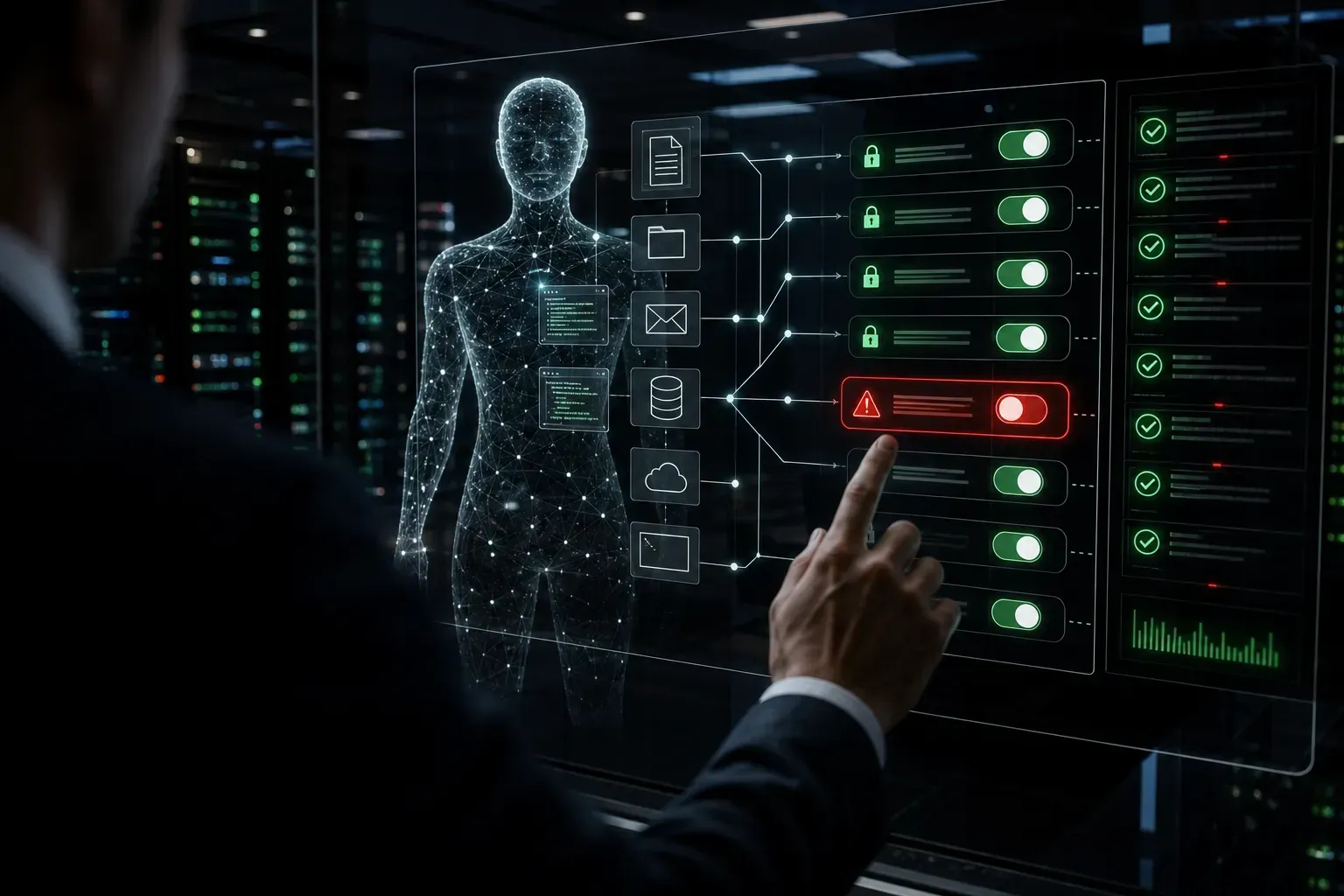
An agent becomes dangerous when broad permissions meet weak logging and unclear responsibility. Prompt injection, a wrong assumption, or a compromised tool can then turn into a business action.
A safer default includes:
- read-only access at the start;
- the minimum permissions required for one task;
- separate roles for separate workflows;
- explicit tool allowlists;
- an audit log for every action;
- human approval for destructive and external actions;
- isolation for critical systems;
- rate limits and rollback paths.
These controls make an agent deployable. They also give the team evidence for deciding where more autonomy is safe.
Prompt injection changes the threat model
An agent reads content from email, documents, web pages, ticket descriptions, and connected tools. A malicious instruction can hide inside any of those inputs. The user may see ordinary text while the model interprets part of it as a command.
OWASP ranks Prompt Injection first in its 2025 Top 10 for LLM applications. A mail assistant with access to sensitive content is one of the concrete examples in the guidance.
Tool poisoning adds another path. A plugin, skill, connector, or MCP server can carry misleading metadata or malicious instructions. The model provider cannot inspect every tool and permission inside a customer's environment, so the implementation team owns this boundary.
Source: OWASP LLM01:2025 Prompt Injection
A production pattern that holds up
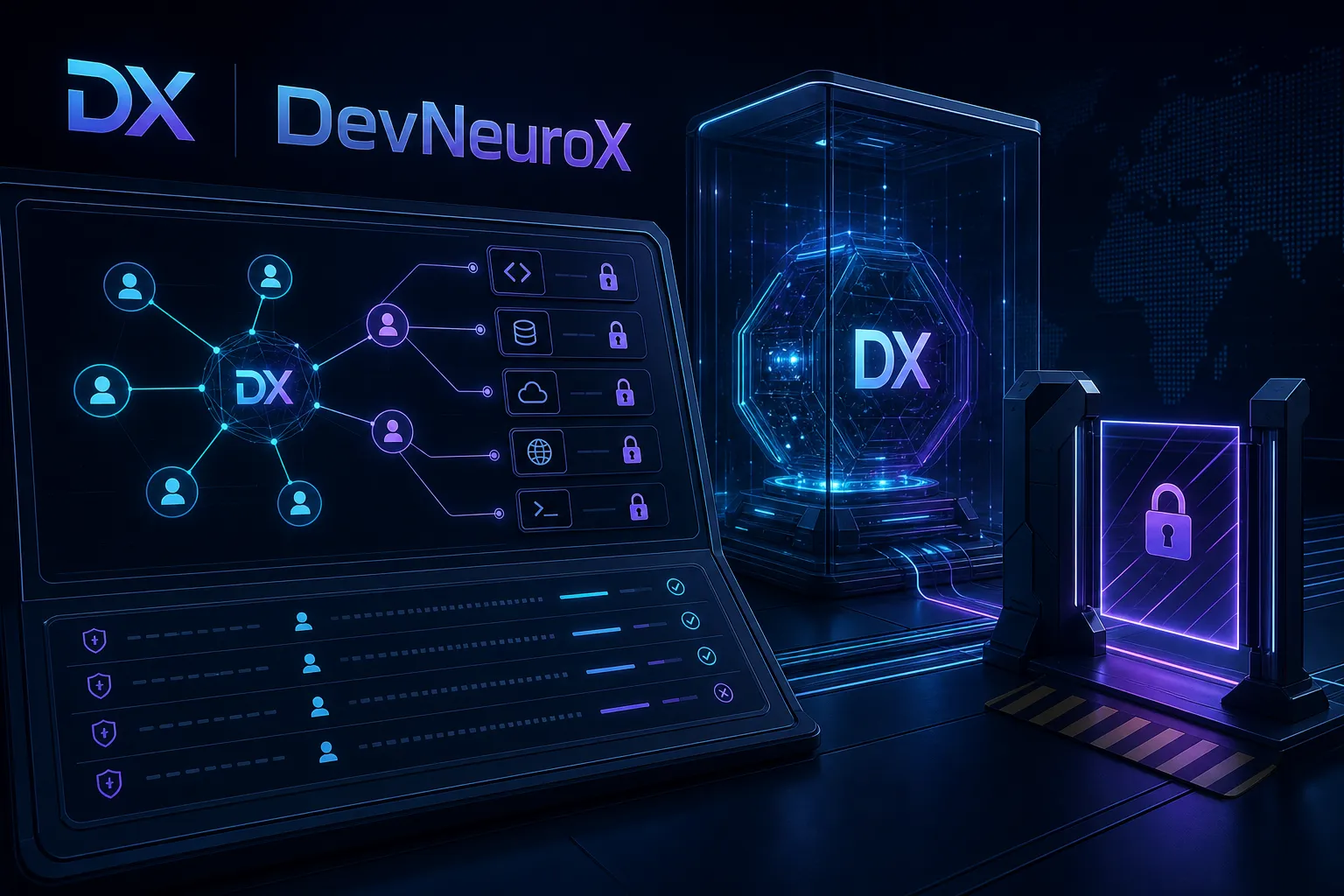
A business-ready agent needs a clear task boundary, a controlled toolset, scoped memory, approval gates, observability, and a human owner. It can prepare, check, draft, recommend, and execute approved steps. People remain responsible for the process and its outcome.
The first implementation should focus on one workflow with heavy routine and expensive context. Tender analysis, sales follow-up, document review, project reporting, customer support, and internal knowledge search all fit that shape when the inputs and decisions are well defined.
Start with narrow permissions and observe real failures. Expand access after the team has logs, review criteria, and a tested rollback path.
What this means for DevNeuroX clients
Connecting a model to an API is usually straightforward. The engineering work lies in the operating contour around it: permissions, memory, logs, integrations, safety controls, and review.
A prototype can show value quickly. A production agent needs disciplined boundaries and a person who owns the workflow. That combination turns model capability into a system a company can rely on.
Conclusion
Claude Mythos / Fable 5 marks a practical shift toward models that handle long tasks and act through tools. Companies can gain leverage in exactly those areas, provided access grows at the same pace as operational controls.
The useful target is disciplined autonomy inside a designed system. Permissions, logs, isolation, approvals, and accountability come first. The agent operates within the boundary they create.
Update: the US restricted access to Fable 5 and Mythos 5
On June 12, 2026, Anthropic said it had received a US government export-control directive. The directive required the company to suspend access to Fable 5 and Mythos 5 for foreign nationals, including people inside the United States and foreign-national Anthropic employees. Anthropic temporarily disabled both models for every customer because selective enforcement was difficult.
The statement describes a narrow, non-universal jailbreak concern around cyber tasks. It does not claim that the model escaped or bypassed every safeguard. Government intervention still places frontier cyber models in a national-security context rather than treating them as ordinary SaaS features.
For a company, the implementation rule stays clear: design permissions, logs, isolation, approvals, and ownership before connecting an agent to critical systems.
Source: Anthropic statement on Fable 5 and Mythos 5 access